When a Voice Becomes a Connection
Team Project
DURATION
Jun 2024
Project Overview
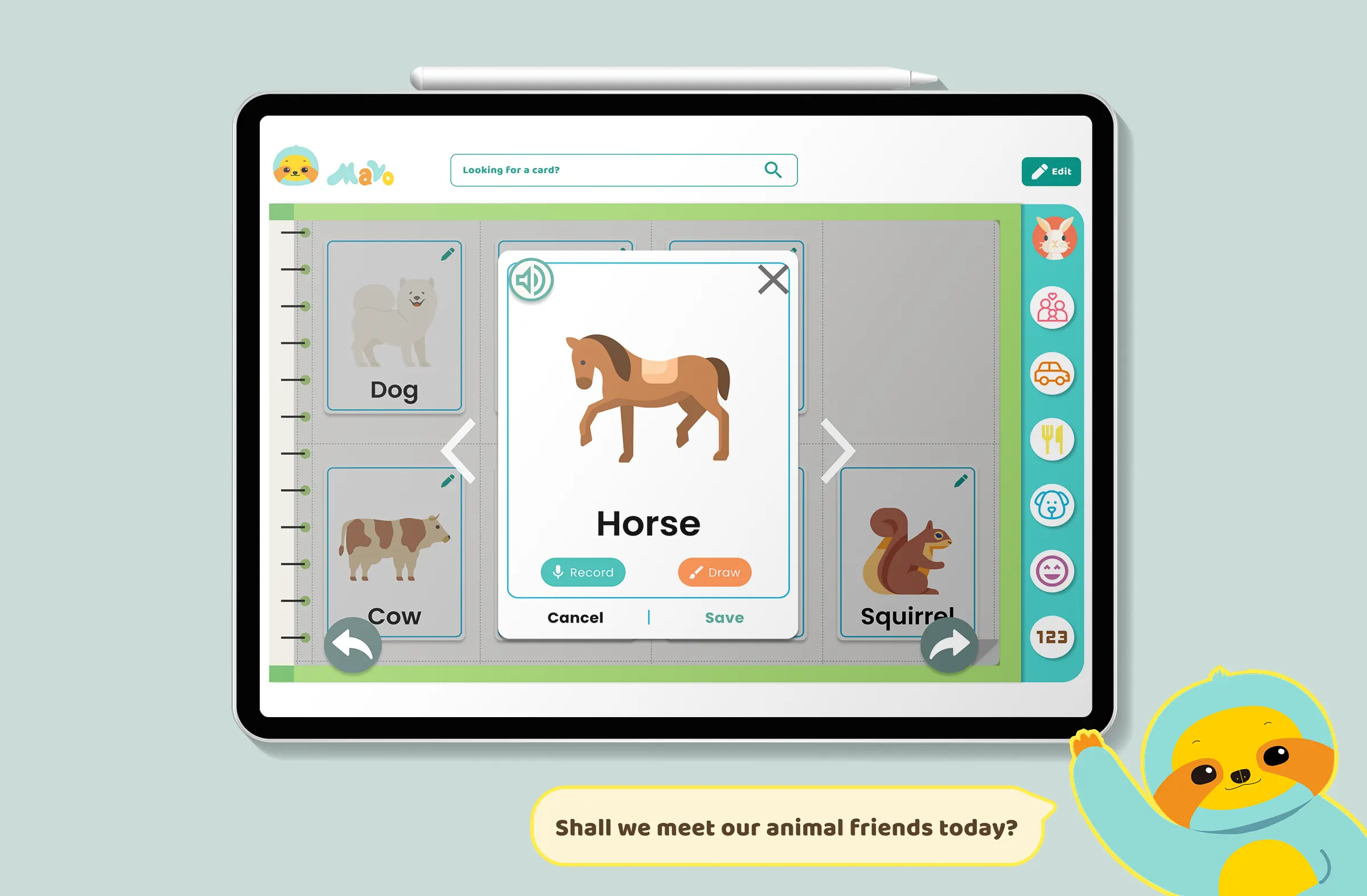
Mavo is a vocabulary learning app designed for nonverbal children. Instead of using synthetic voices and standardized images, it turns caregivers’ recorded voices and children’s own drawings into personalized learning materials.
What’s the problem?
Engagement dropped by over 40% with robotic voices and generic visuals

Children often disengaged or repeatedly selected only their favorite cards, avoiding exploration.
What’s the solution?
Emotional connection sustains attention better than rewards or correctness.
Mavo replaces synthetic speech with familiar voices and enables learning through child-created drawings, creating an emotionally safe, playful experience
Discovery & Insight Synthesis
Understanding why others failed
Most tools rely heavily on text-to-speech repetition and structured prompts, prioritizing communication output over emotional input.
While these apps support word recognition, they often fail to create emotional connection or intrinsic motivation to express.

From findings to design opportunities
Research revealed that engagement increases when learning feels emotionally familiar, personally owned, and creatively expressive.



These insights shaped the foundation for an adaptive, emotionally responsive interface.
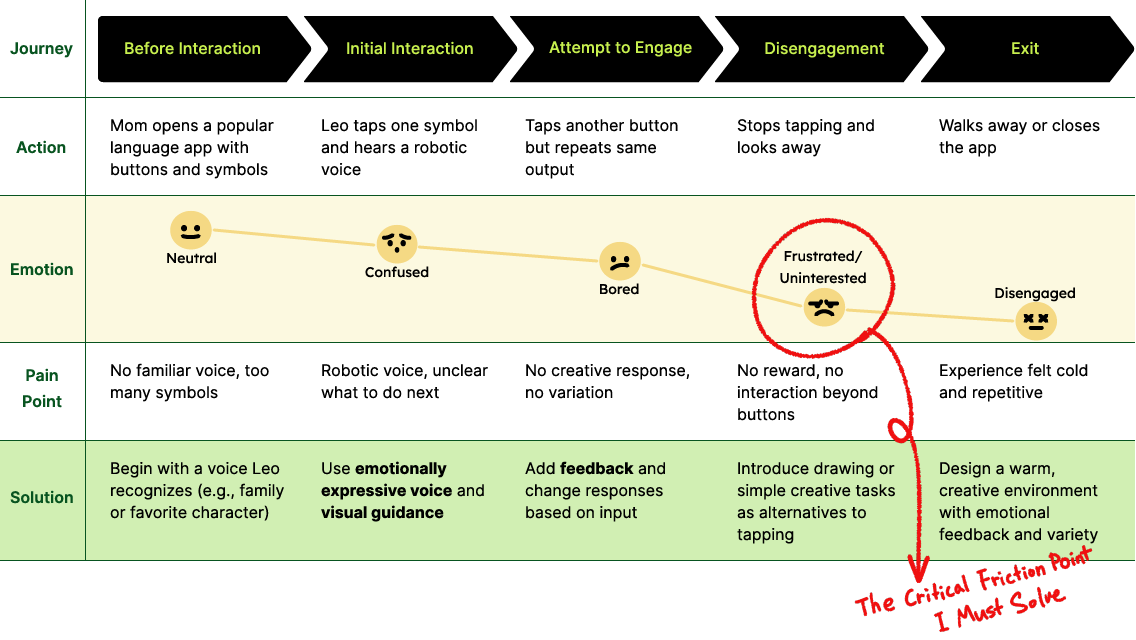
User Journey map
Understanding Emotional Friction
Observation revealed that excessive feedback, correctness cues, or performance pressure disrupted emotional focus.
When learning felt evaluative rather than supportive, children disengaged.
What do users need to stay emotionally engaged?
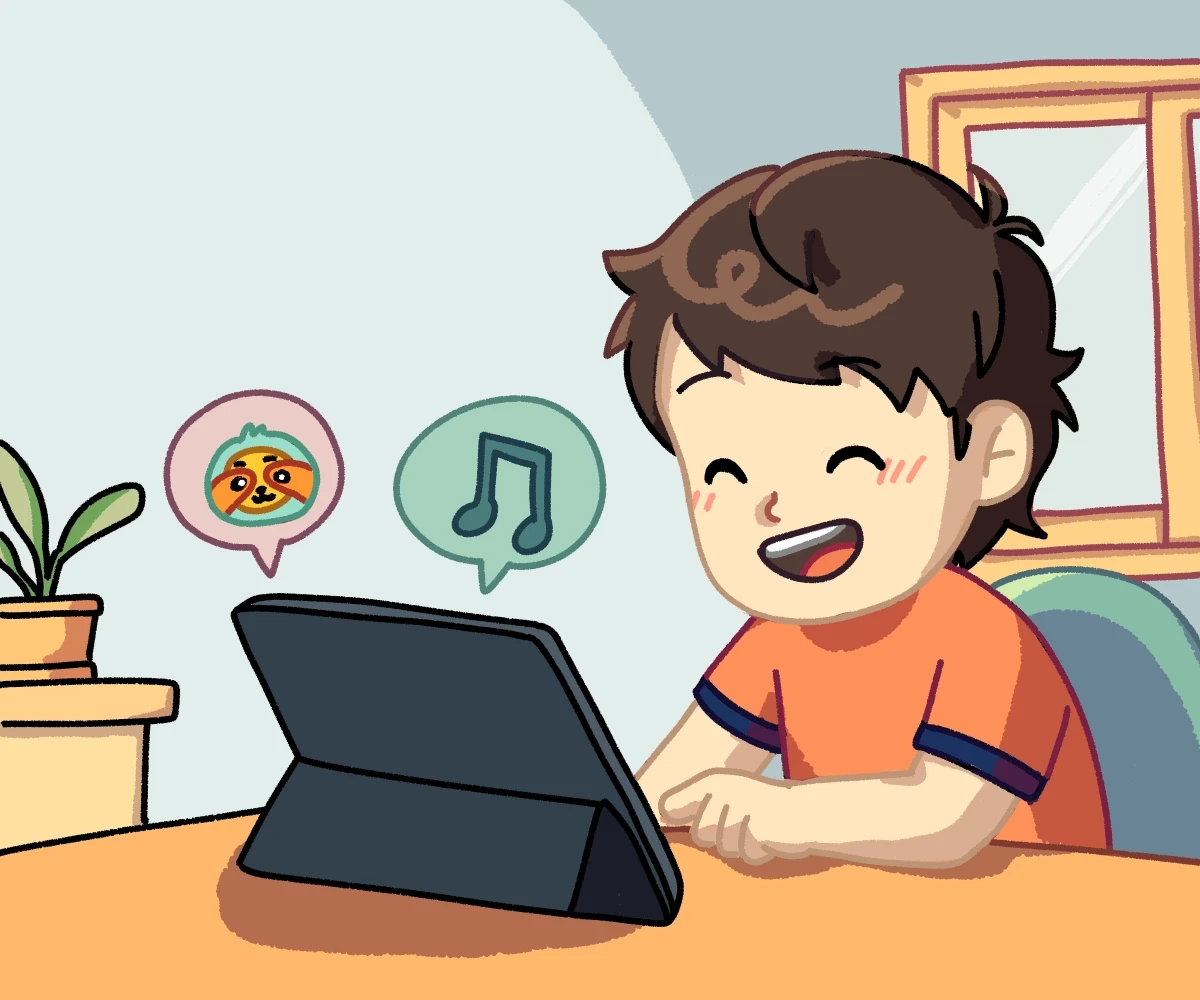
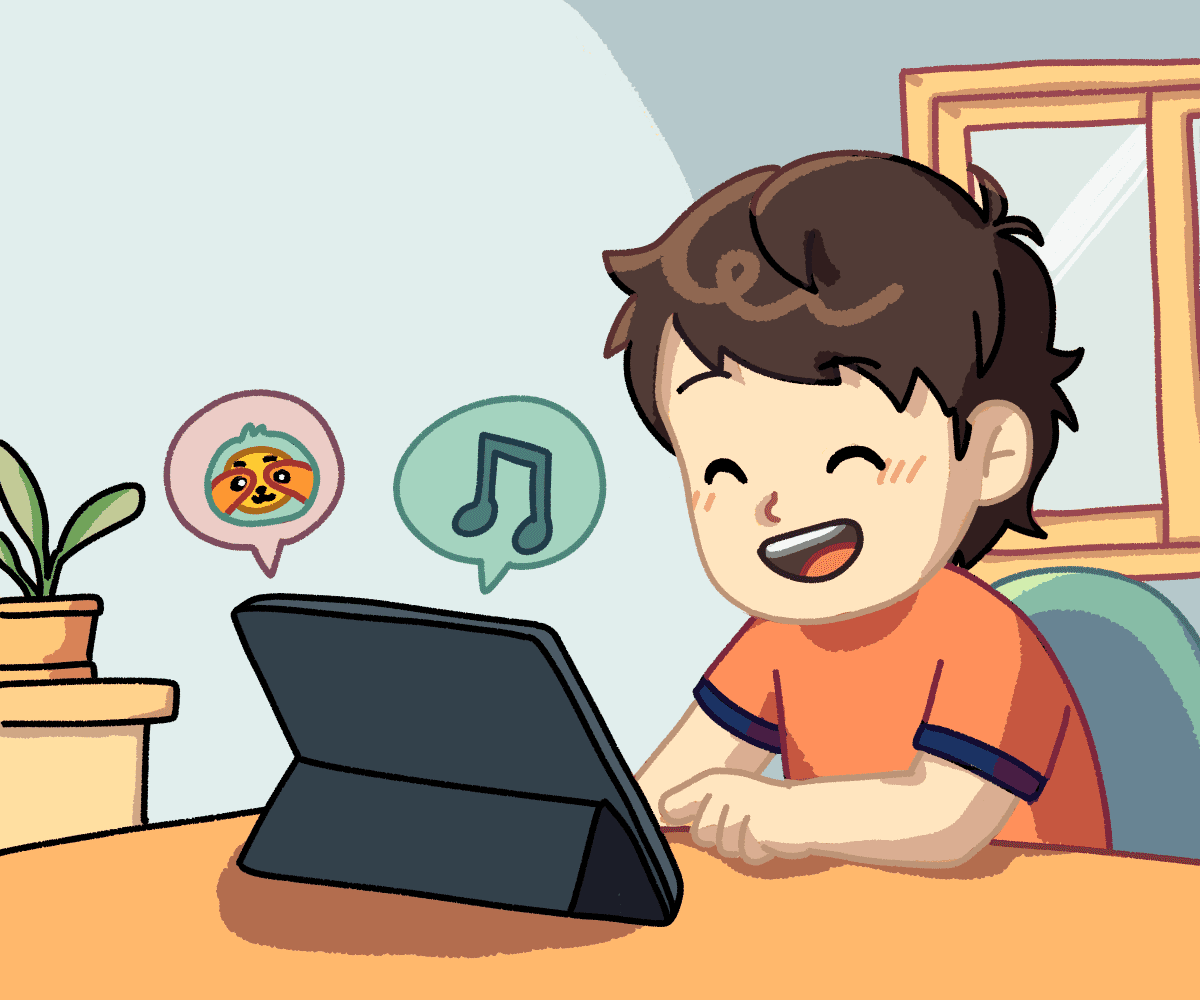
Familiar voices help children stay focused longer.
Personalization increases motivation
Drawing and recording create emotional ownership.
From Recognition to Emotional Connection
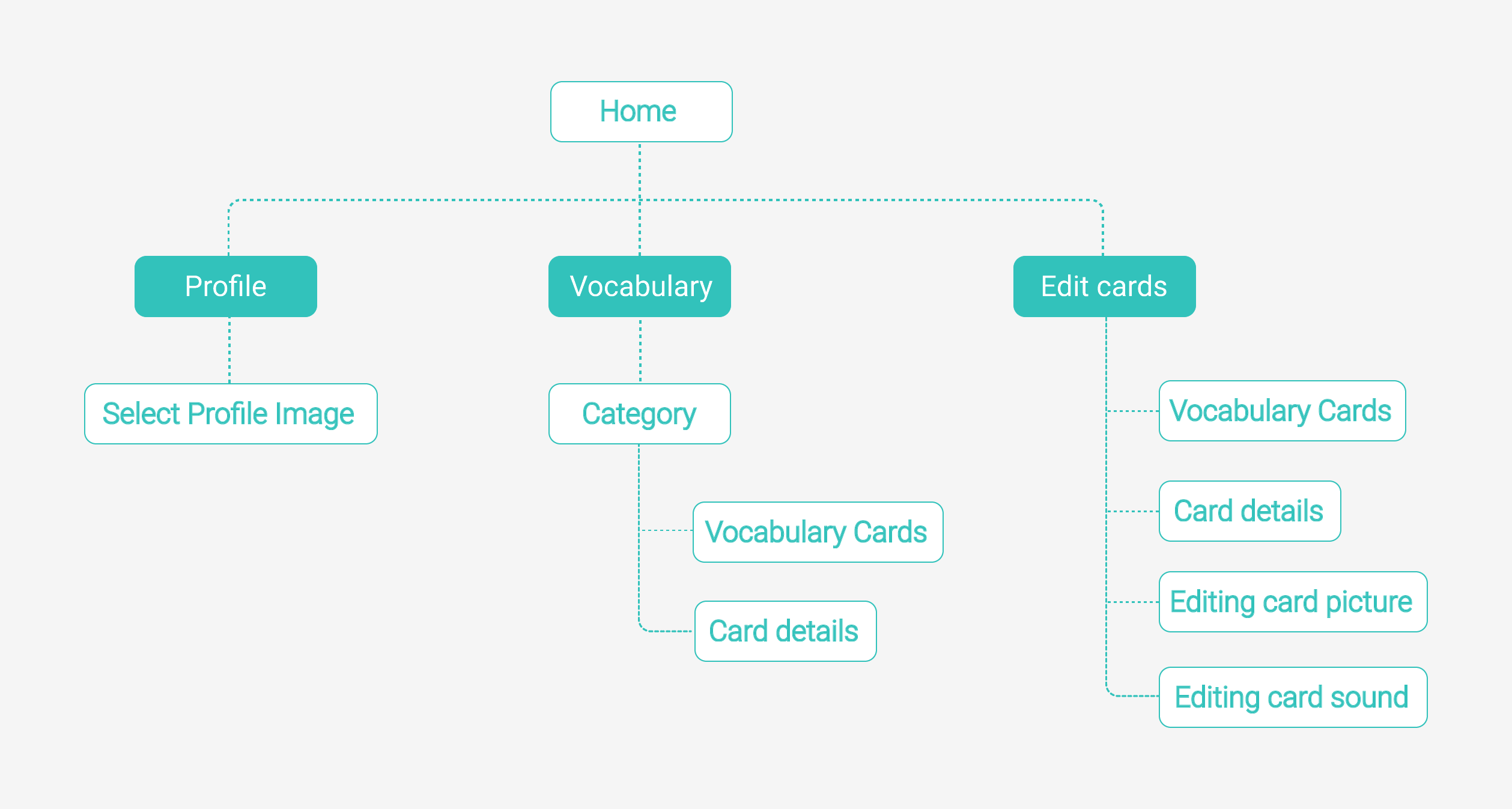
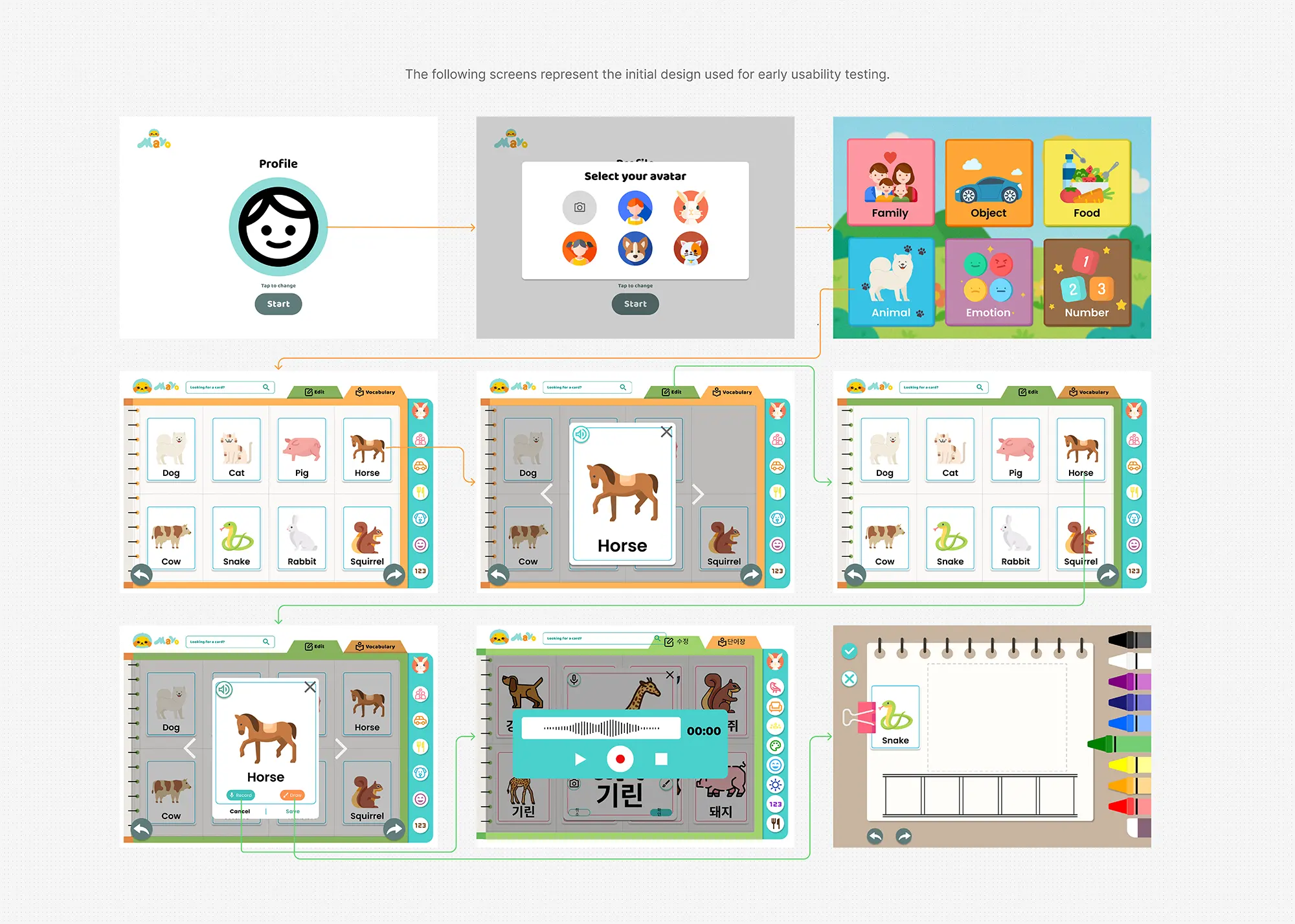
Interface & screen flow
However, early testing revealed that even emotionally guided systems can create unintended friction when structure and hierarchy are unclear.
Usability Testing & Iteration
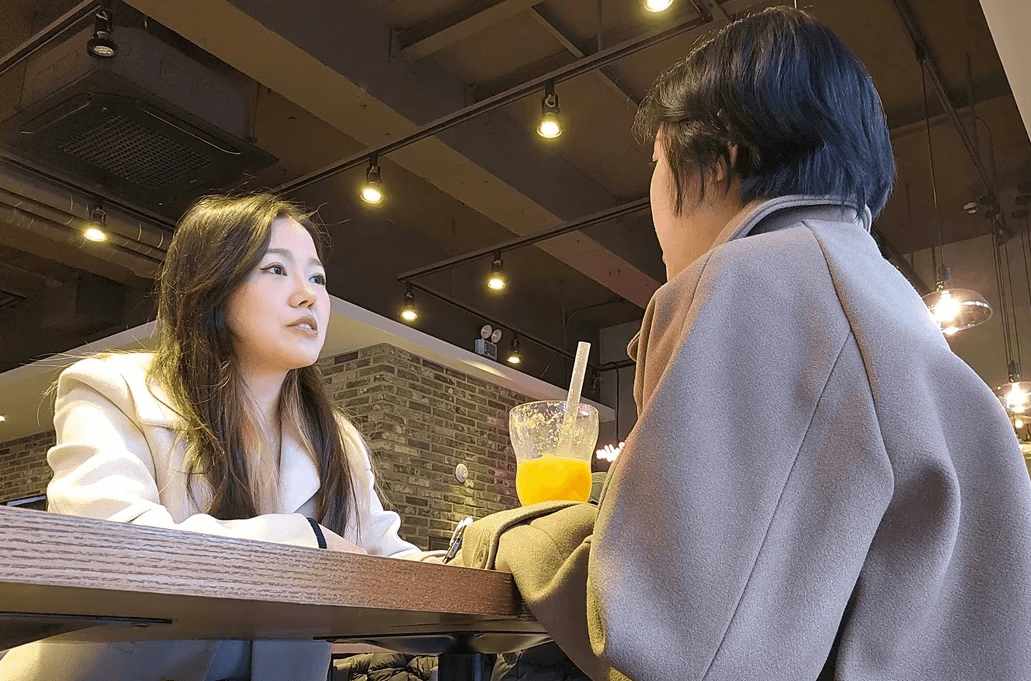
We observed three children using Mavo on a tablet in 5-7 minute sessions. During each session, a teacher worked one-on-one with the child and encouraged verbal responses. I wanted to see whether the prototype supported child-led interaction and natural exploration. While this was not a controlled study, two clear behavioral patterns emerged.
The focus was on identifying moments of confusion, distraction, and limited engagement.
Navigation Confusion (Parent Feedback)
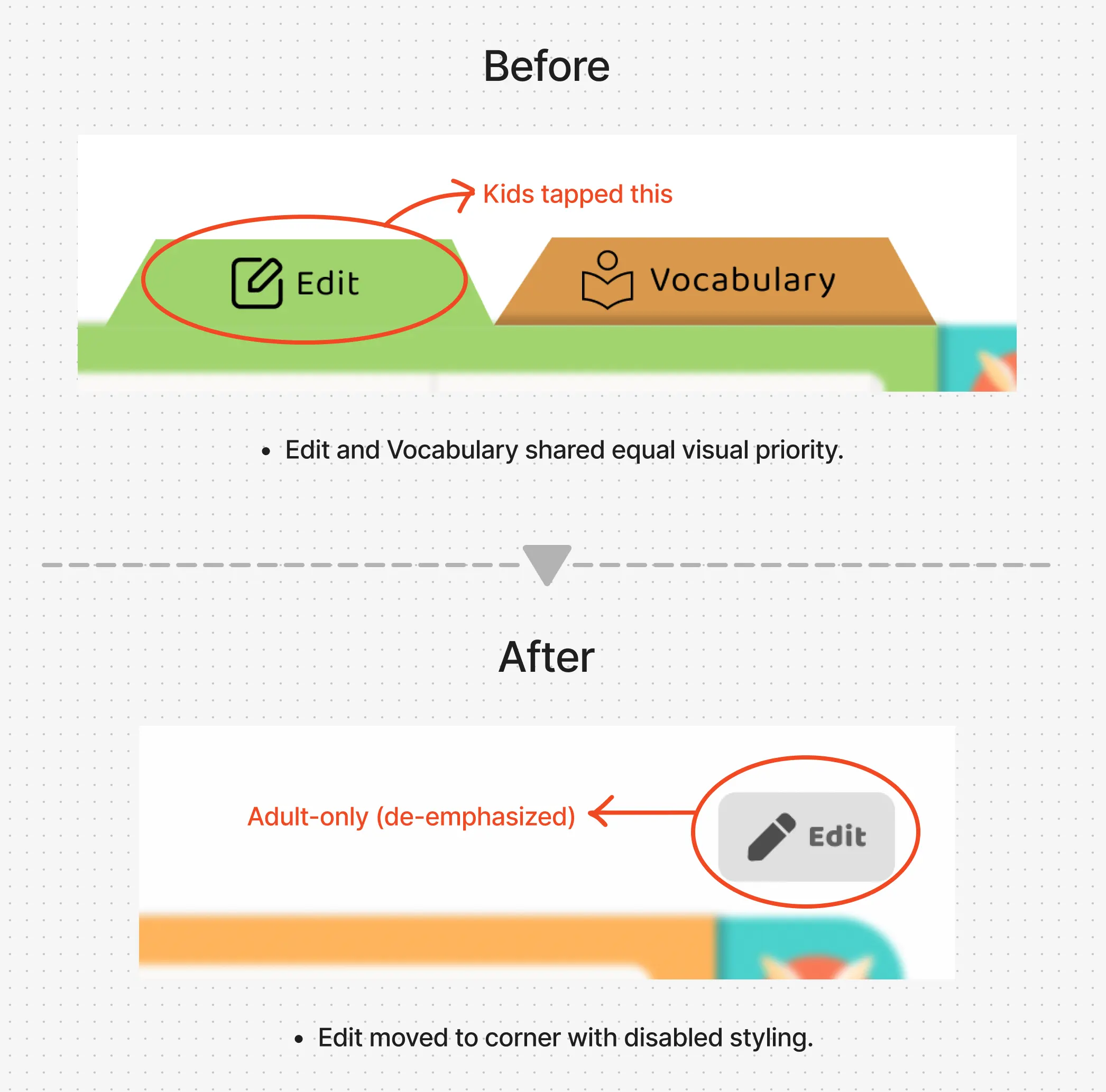
“Edit and Vocabulary modes are confusing, and my son was trying to click them.”
Design Response:
Caregiver functions needed to be visually separated
to maintain a child-focused interface.
Low Exploration (Teacher Feedback)
“The student clicked only certain topic cards that he was interested in.”
Design Response:
Instead of instructions or rewards, subtle visual and narrative cues were added to gently invite exploration.
Outcome
As a result, voluntary interaction increased by 1.5×, with broader exploration across categories.
Key screens
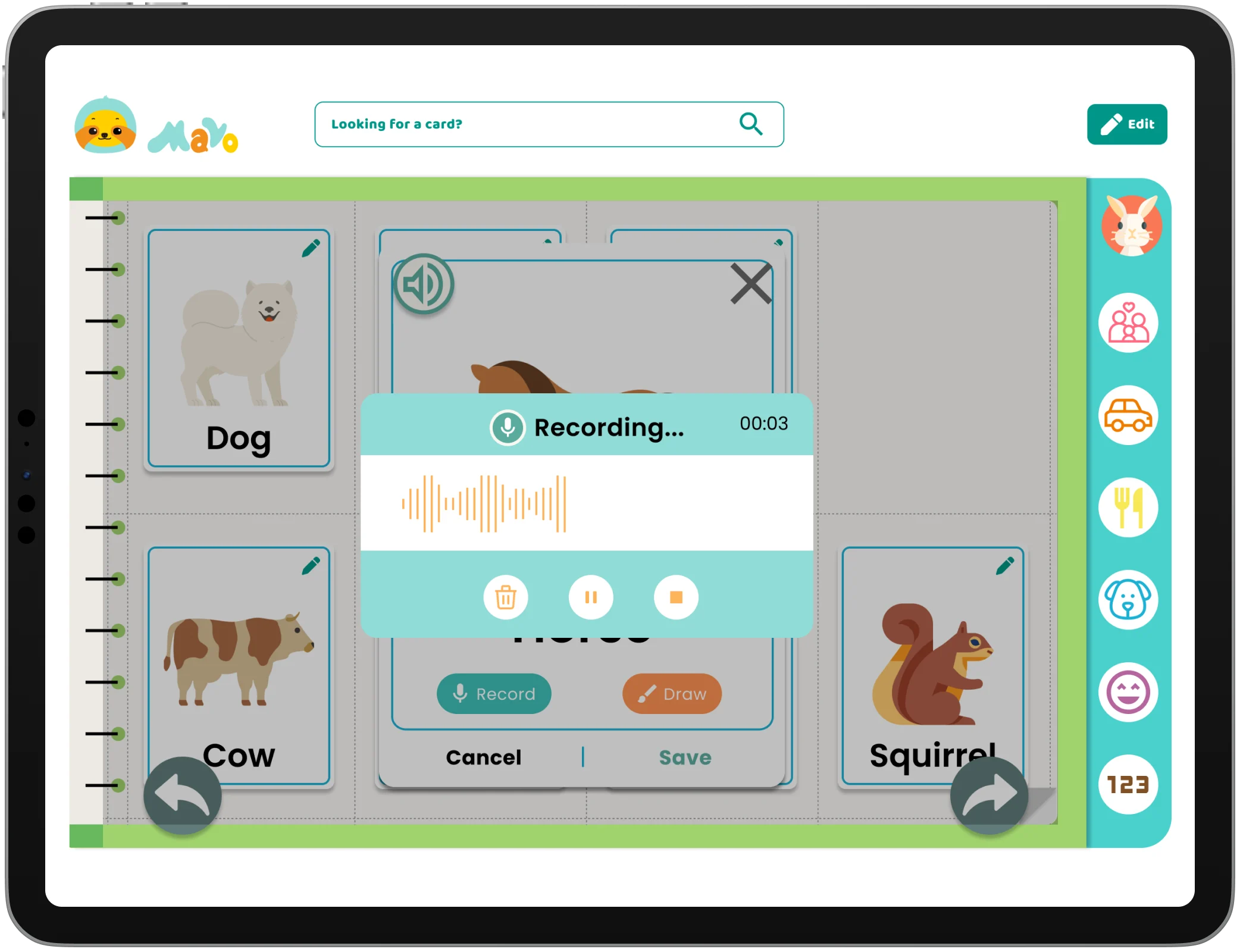
A Safe and Supportive Speaking Practice with a Familiar Voice
Practice safely with a familiar voice: recordings made by caregivers or teachers replace synthetic speech.
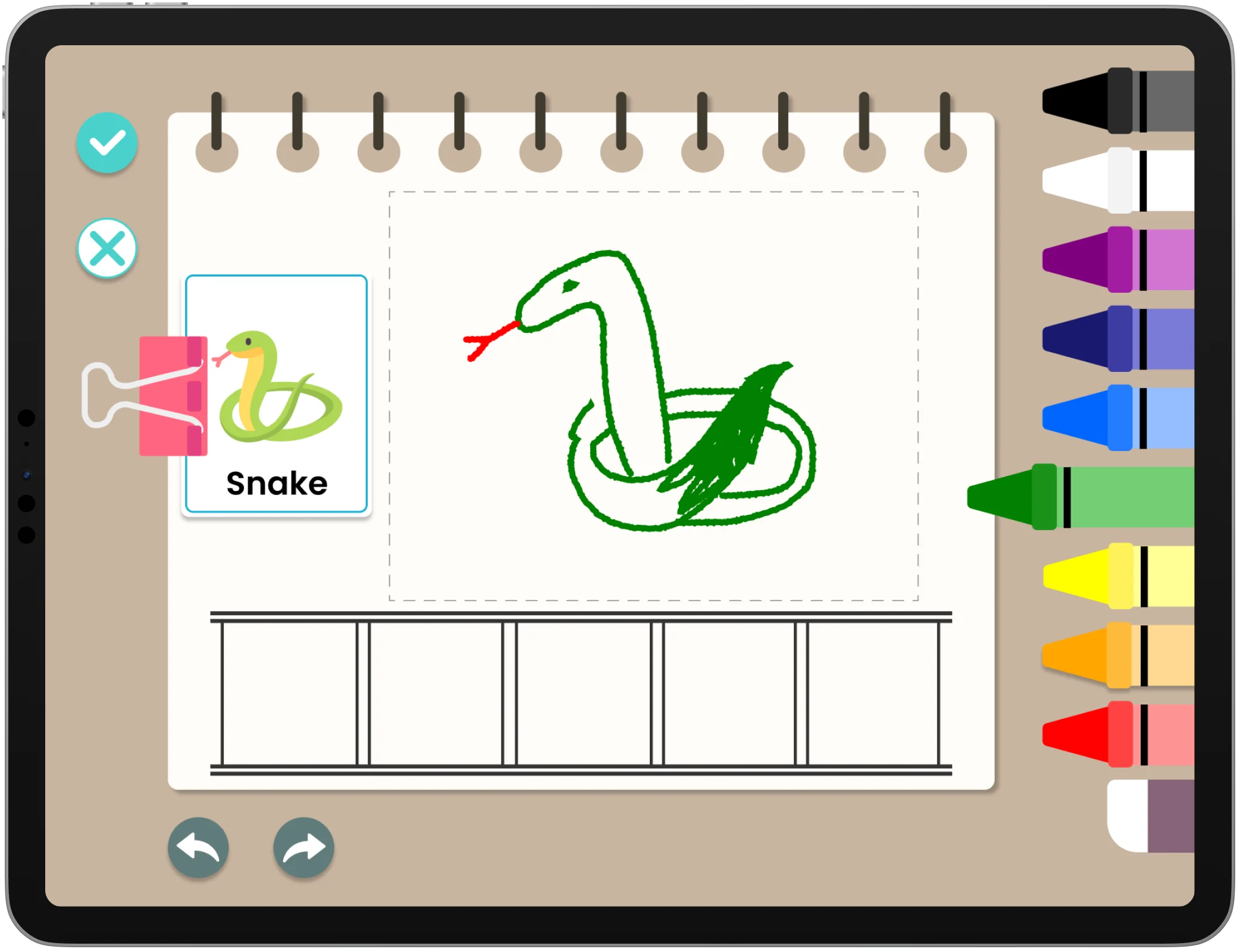
Building Attachment Through Self-Created Cards
Cards created by the child: kids turn their own drawings into learning cards.
Key Micro Interaction from iterate
Learning that moves at a child’s rhythm
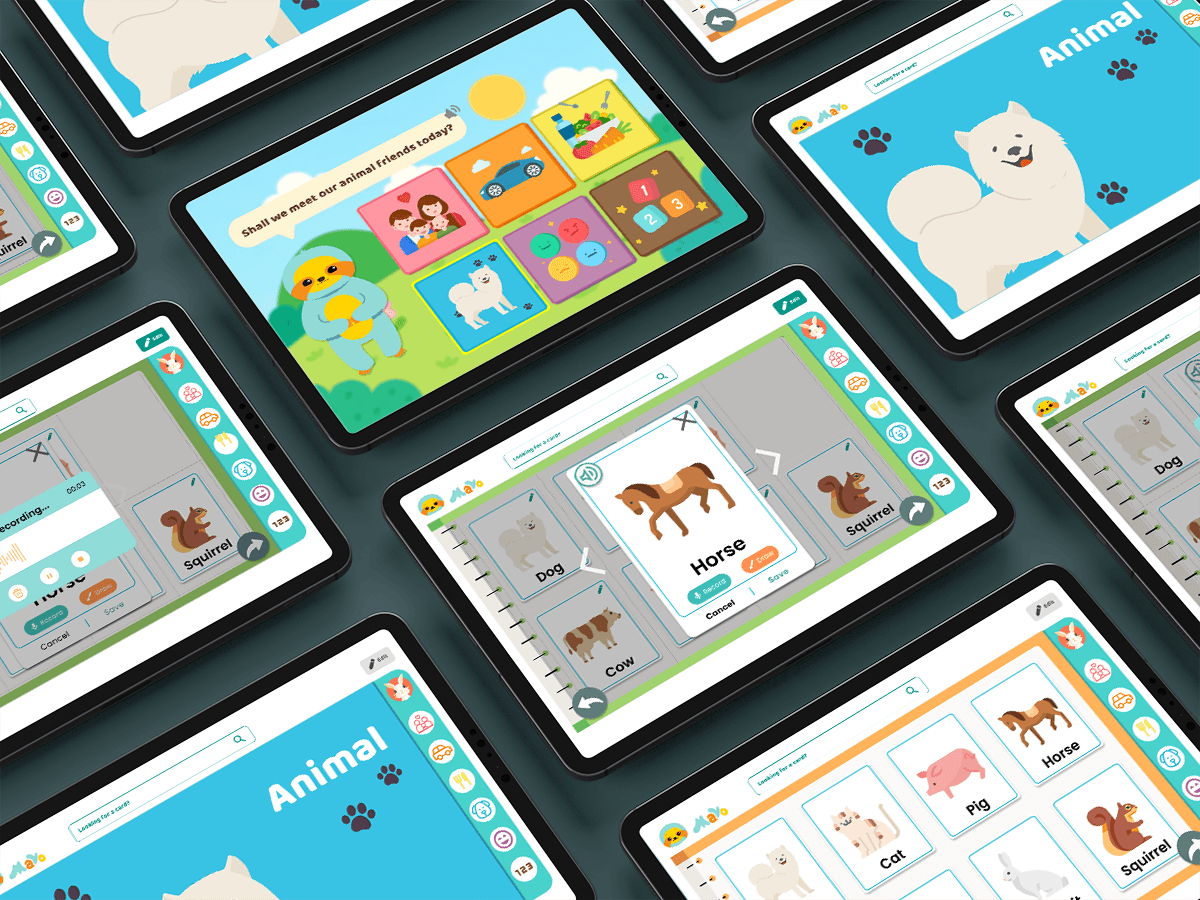
Mavo turns word learning into a tactile, emotionally guided experience. Children tap or swipe cards to hear familiar voices and learn at a pace that feels safe and natural.
Learning that feels like a conversation
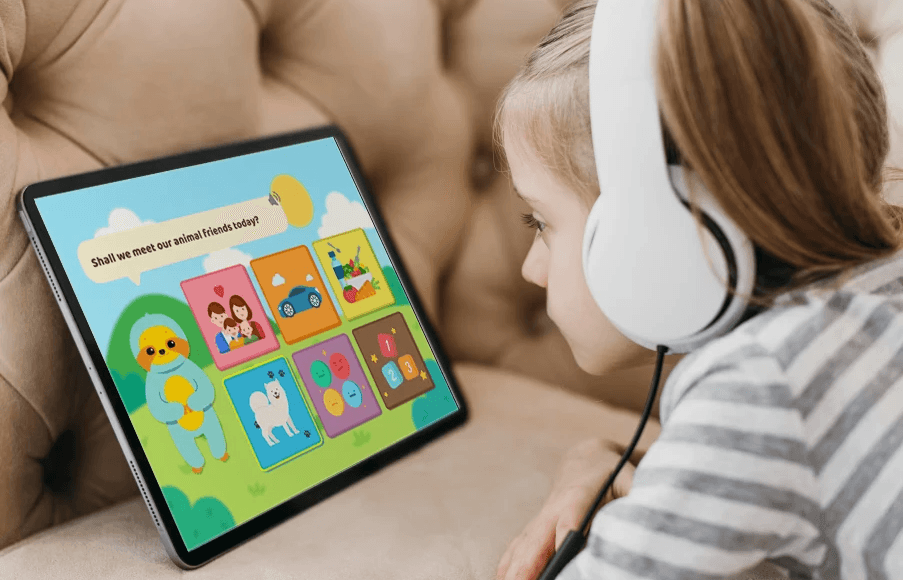
Learning that feels like a conversation: a friendly mascot guides with warm voice prompts.
Prototyping the Experience
Recognition, creation, and feedback form one continuous learning loop.
Reflection
Designing emotion, not instruction
It wasn’t about adding more features. It was about pace, tone, and trust.
Simple and predictable feedback worked better than complex or reward-driven interactions.
Read more of my other projects